Hearing Loss and Depression Among Allentown Seniors
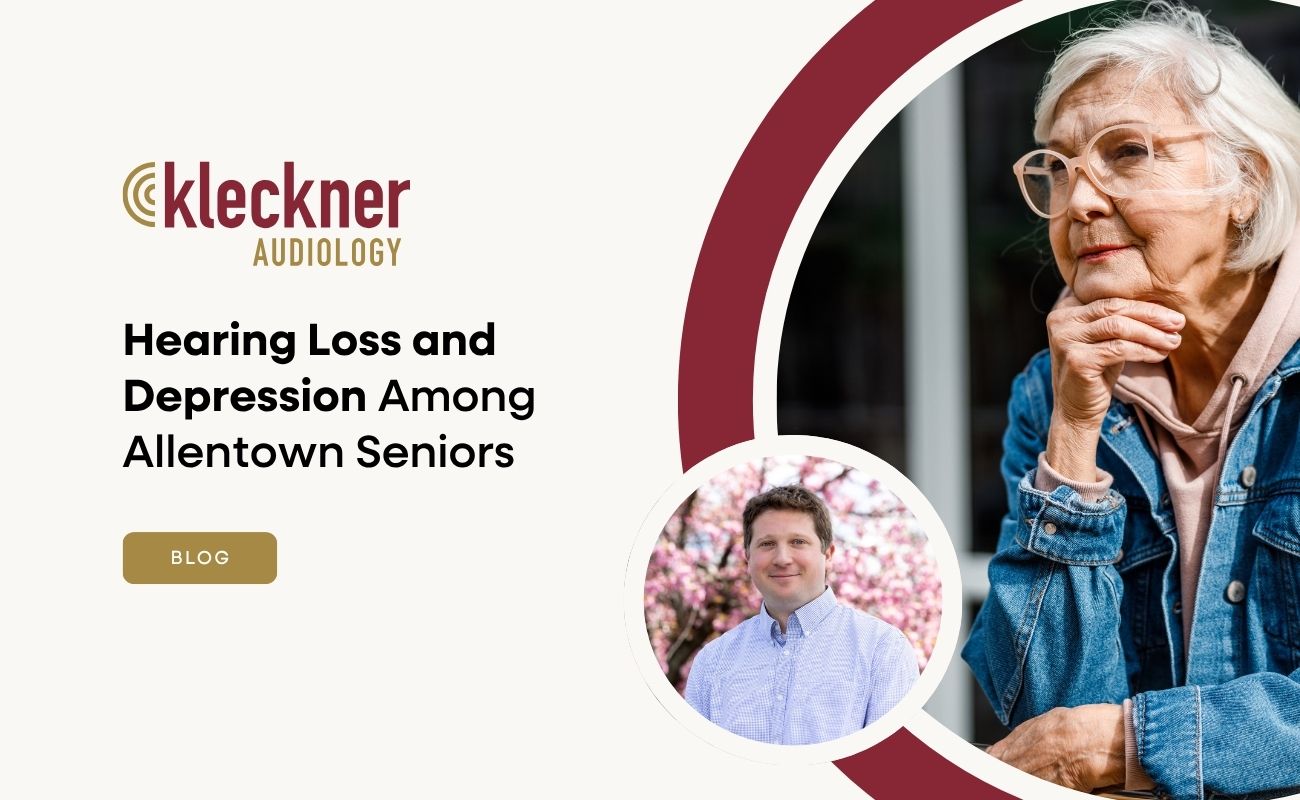
There's a connection that doesn't get talked about nearly enough: hearing loss and depression often go hand in hand for older adults. Not just the frustration of missing words, but what that struggle quietly does to a person over months and years. Isolation. Exhaustion. A slow retreat from the things that used to bring joy.
At Kleckner Audiology, this is something we see and take seriously every day.
What the Research Actually Shows
The numbers are hard to ignore. Adults with untreated hearing loss are significantly more likely to experience depression and anxiety than those who hear well. One large-scale analysis found that people with hearing loss were 57% more likely to experience deep depression and the risk climbed with the degree of loss.
That's not a coincidence. It's a pattern with a clear cause.
When you can't hear well, you start pulling back. You skip family dinners because asking people to repeat themselves all evening is exhausting. You nod along and hope no one notices you missed the punchline. Slowly, the things that used to feel easy start feeling like work and that withdrawal creates fertile ground for real depression.
Why Seniors Face a Higher Risk
Age-related hearing loss affects roughly one in three adults between 65 and 74, and nearly half of those over 75. It tends to creep in so gradually that many people don't notice how significant it's become until it's already affecting their daily life.
The social consequences compound over time. If you live alone, or you've lost a spouse or close friends, your built-in opportunities for connection are already fewer. When hearing loss makes those connections harder to hold onto, loneliness can take hold fast. And once it does, it's genuinely difficult to shake.
This isn't a character flaw or a sign of weakness. It's a health issue — one that's both common and treatable.
How Treating Hearing Loss Can Improve Your Mood
Here's something that surprises many of our patients: treating hearing loss often improves mental health in meaningful ways.
People who use hearing aids consistently report less social isolation, better emotional well-being, and fewer symptoms of depression compared to those who leave hearing loss unaddressed. Some research also points to improvements in memory and mental sharpness which matters a great deal if those are already concerns for you.
Think about what that looks like in real life. Laughing at the right moment. Actually catching what your grandkids are saying from across the table. Being present in a conversation instead of concentrating so hard you're wiped out afterward. Those moments add up.
Modern hearing aids have changed dramatically. Devices like the Oticon Zeal, Starkey Omega AI, and ReSound Vivia are small, rechargeable, and built with AI that helps you follow speech even in noisy settings like restaurants, family gatherings, the situations where hearing loss tends to hit hardest. These aren't the bulky, whistling devices people remember from years ago.
Signs to Watch For in Yourself or Someone You Love
Hearing loss doesn't always announce itself clearly. Sometimes the emotional signs show up before anyone has named the actual problem.
A few things worth paying attention to:
- Avoiding social situations that used to feel enjoyable
- Feeling drained after conversations that require a lot of concentration
- Getting easily frustrated or irritable in group settings
- Leaning heavily on TV captions or asking people to repeat themselves often
- A general sense of being left out or disconnected
If any of that sounds familiar, whether for yourself or someone you care about, a hearing evaluation is a reasonable place to start. Not because it solves everything overnight, but because knowing where you stand gives you options.
Hearing Care That Looks at the Whole Picture
At Kleckner Audiology, we've been serving the Lehigh Valley since 1974. We know that hearing care for older adults isn't just about the test results. It's about understanding how hearing loss is actually affecting your life, your relationships, your energy, your confidence in social situations.
Dr. Peter Kleckner and Dr. Katherine Stabler take time to hear you out before recommending anything. There's no pressure, no rushing through an appointment. Just an honest conversation about where you are and what might help.
If you're an older adult in the Allentown area or if you're trying to help a parent or loved one figure out next steps, we're here. Call us at 610-435-8299 or schedule online at kleckneraudiology.com. You don't have to figure this out alone.

Dr. Peter Kleckner, Au.D., a seasoned audiologist with experience from prestigious institutions, brings his expertise in comprehensive hearing evaluations and treatments to Kleckner Audiology, where he's been serving patients since 2016.