Modern Hearing Aid Features That Actually Matter
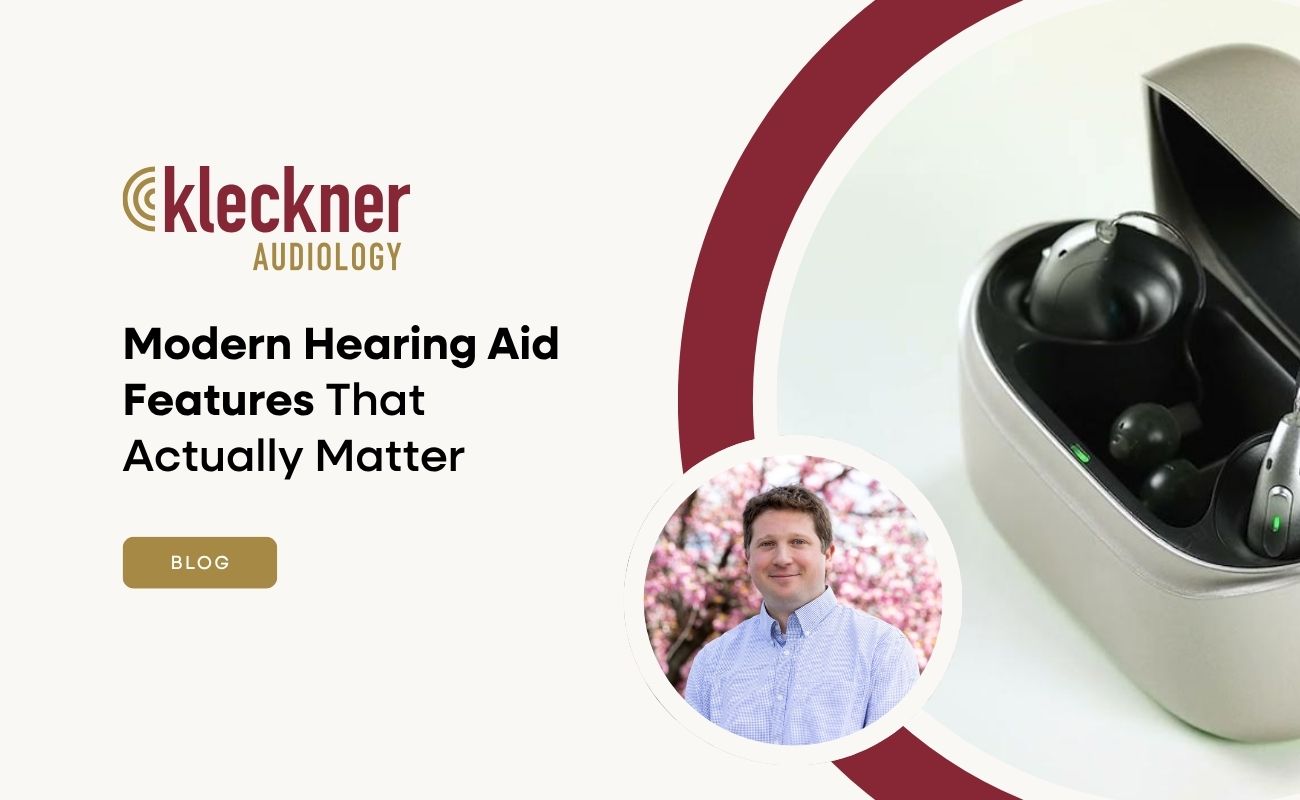
Today's hearing aids do far more than amplify sound. The features built into modern devices can meaningfully improve how well you hear in real situations — not just in a quiet office, but at a crowded dinner table, on a phone call, or watching TV. Here's what's worth paying attention to.
AI-Powered Sound Processing
Artificial intelligence is now the foundation of premium hearing aids. Manufacturers like Phonak, Oticon, ReSound, Starkey, Signia, and Widex have all built deep neural network (DNN) processing into their latest platforms. What that means in practice is that the hearing aid can continuously analyze its sound environment and make fast, automatic adjustments — prioritizing speech, reducing background noise, and adapting as you move between different settings.
The Phonak Audéo Infinio Sphere, for example, uses a dedicated AI chip trained on 22 million sound samples. The ReSound Vivia's DNN was trained on 13.5 million spoken sentences. The Starkey Omega AI introduces DNN 360, which adds directional sound awareness to AI processing. These aren't marketing numbers — they reflect how much more capable modern sound processing has become compared to previous generations.
Speech Clarity in Noise
This is the feature most people actually care about, and it's where AI processing makes the biggest real-world difference. Hearing in noise is the number-one challenge for people with hearing loss.
Features like Phonak's Spheric Speech Clarity (up to 10 dB signal-to-noise improvement), ReSound's Intelligent Focus, and Widex Allure's Speech Enhancer Pro all target this specific problem. Rather than just turning up volume, these systems try to separate the voice you want to hear from the noise around it.
If you're frequently in restaurants, group conversations, or noisy work environments, this is the feature to prioritize.
Rechargeable Batteries
Rechargeable hearing aids have become the standard, and for good reason. Disposable battery management is one of the most common frustrations hearing aid users report — particularly for those with dexterity challenges. Most current models offer a full day of use on a single charge, with quick-charge options that provide a few hours of power in 15–30 minutes.
The Signia IX, for instance, offers up to 39 hours of battery life. Starkey's Omega AI maintains 51 hours. The Phonak Infinio Sphere charges fully in about 3.5 hours. If you're considering a new pair of hearing aids, rechargeable is worth choosing unless you have a specific reason not to.
Bluetooth Connectivity and Auracast
Streaming audio directly from a smartphone, TV, or tablet is now standard on most premium devices. Hands-free phone calls, music, and streaming can all go directly to your hearing aids — no intermediary device needed for most current platforms.
A newer development worth knowing about is Auracast, a Bluetooth broadcast technology that allows public venues like theaters, places of worship, and airports to stream audio directly to compatible hearing aids. ReSound Vivia and Savi, Signia IX, and Starkey Omega AI are among the models currently supporting Auracast. This technology is still rolling out in public spaces but is expected to become increasingly common.
Tinnitus Management
Many people with hearing loss also experience tinnitus — ringing or buzzing in the ears. Several modern hearing aids include built-in tinnitus management features that generate masking sounds or sound therapy options alongside regular amplification. Widex has long been known for this capability, and their current Allure platform includes SoundRelax fractal tones. Phonak Infinio includes a Tinnitus Balance feature, and Starkey Omega AI also has tinnitus support built in.
For those with more significant tinnitus, we also offer the Lenire device — an FDA-approved, clinically trialed tinnitus treatment that goes beyond what hearing aids alone can provide.
What OTC Devices Don't Offer
Over-the-counter hearing aids have made basic amplification more accessible, and that's a positive development. That said, they're limited — they aren't programmed to your specific hearing loss, and they don't come with professional follow-up care. The features described above only produce consistent results when a device is properly fitted and verified by an audiologist who understands your hearing profile, lifestyle, and communication needs. That's where the real difference shows up day to day.
Ready to Find the Right Fit?
If you're curious about which hearing aid features would make the most difference for your specific situation, we'd be glad to help. Schedule a consultation at our Allentown office and we'll walk you through your options based on a thorough hearing evaluation — not a one-size-fits-all recommendation. Call us at 610-435-8299 or schedule online.

Dr. Peter Kleckner, Au.D., a seasoned audiologist with experience from prestigious institutions, brings his expertise in comprehensive hearing evaluations and treatments to Kleckner Audiology, where he's been serving patients since 2016.